
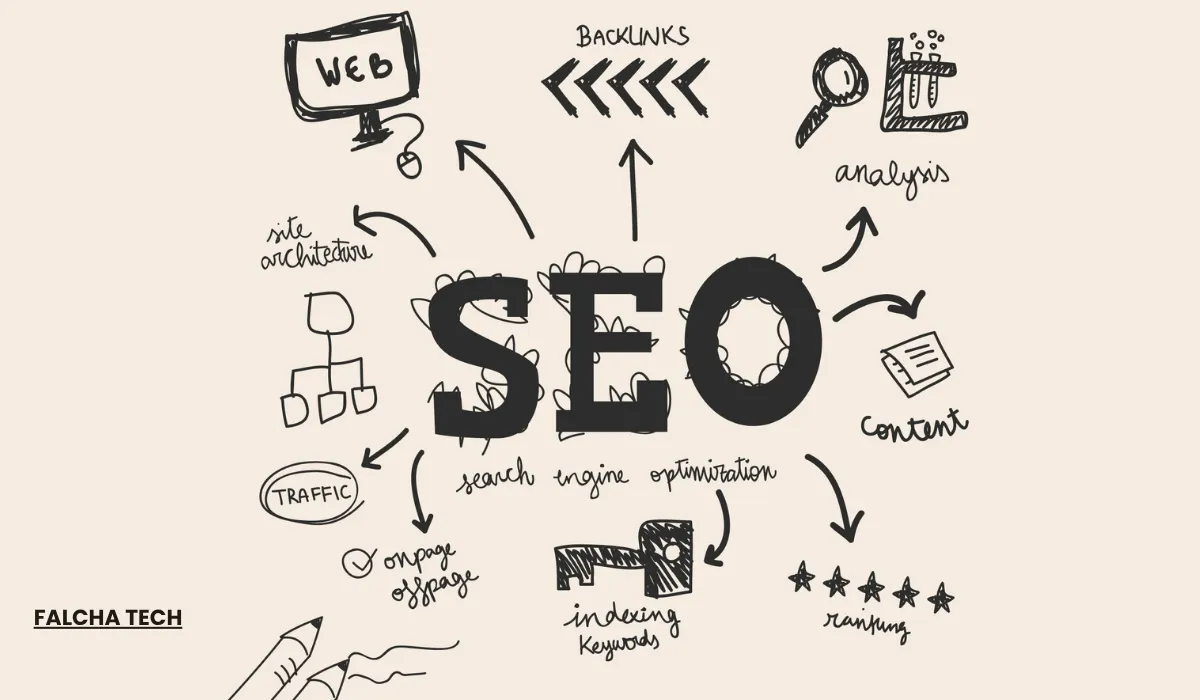
If your business isn’t showing up on Google, the customers searching for what you sell won’t find you. Simple as that. Nepal’s internet user base keeps growing, and more buying decisions start with a search than ever before. This guide walks through what actually moves the needle: local keyword research, bilingual content, Google Business Profile setup, and the technical fixes that matter most.
What is SEO and Why Does It Matter for Nepali Businesses?
SEO (search engine optimisation) is the work of improving your website so it appears higher in search results when people look for products or services like yours. Unlike paid ads, organic traffic doesn’t stop the moment your budget runs out.
For businesses with tight advertising budgets, this matters a lot. A well-optimised website brings in enquiries month after month without ongoing spend on Google Ads or Facebook campaigns. It puts you in front of buyers at the moment they’re actively looking — not interrupting them mid-scroll.
Understanding Nepal’s Digital Landscape
Nepal’s digital environment is mobile-first, Google-dominant, and increasingly bilingual — three factors that directly shape every SEO decision for businesses operating here.
Internet Penetration and Mobile Usage in Nepal
Nepal has around 16.5 million internet users. Mobile broadband penetration has passed 87%, with over 25.6 million 4G subscribers across NTC and Ncell as of early 2025. About 96% of users access the web on a phone.
That one number should drive every design decision you make. If your site loads slowly on mobile data or breaks on a small screen, you will rank lower. Google measures this directly.
Google vs. Other Search Engines in Nepal
Google holds over 96% of the search market in Nepal. Bing sits at roughly 2.7%. There’s no practical case for optimising specifically for Bing or Yahoo here. Put your energy where your users actually search.
Nepali Language Search Trends
More people are searching in Nepali, in both Devanagari script and romanised text. Voice search in Nepali is also picking up alongside smartphone use. If your website is English-only, you’re missing a chunk of searchers who prefer their own language. Businesses that publish in both reach more people and tell Google they’re locally relevant.
Keyword Research
Keyword research tells you what your customers are actually typing into Google. It also tells you how hard it is to rank for those terms.. Get this right and the rest of your SEO has a clear direction.
Finding Local Keywords and Long Tail Keywords
“Restaurant” is too broad. “Best momo restaurant Kathmandu” is what someone types when they’re ready to go eat. Target location-specific phrases like that. The competition is lower, and the people clicking are much closer to becoming customers.
The longer and more specific the phrase, the better this tends to work. “Affordable web design company Kathmandu” attracts someone who has already decided they want to hire someone. They just need to pick who.
Nepali Language SEO & Bilingual Strategy
Target keywords in both languages. A trekking company should go after “trekking packages Nepal” Use hreflang tags on bilingual pages so Google serves the right version to the right user and doesn’t treat them as duplicate content.
Restaurants & Cafés
Use location-specific terms: “rooftop café Thamel,” “best dal bhat Pokhara,” “Newari food near me.” Create separate pages for your location, your menu highlights, and anything distinctive about the dining experience. Generic pages don’t rank; specific ones do.
Best Tools for Keyword Research
Google Keyword Planner gives you volume estimates for Nepali searches. Google Search Console shows what’s already sending traffic to your site. Google Trends is useful for spotting seasonal patterns. Tourism businesses especially benefit from seeing when trekking-related searches peak.
Ubersuggest and Answer the Public surface question-based ideas good for blog content. The free tiers of Ahrefs and Semrush are enough for basic competitor research.
On-Page SEO Best Practices
On-page SEO covers the elements on your actual web pages. These are the signals Google reads to figure out what each page is about.
Optimizing Title Tags and Meta Descriptions
Your title tag is the clickable headline in search results. Keep it under 60 characters, lead with your main keyword, and include your location: “Web Design Services Kathmandu | Your Company Name.” Your meta description (the text below the title) should be 150–160 characters with a clear next step”Get a free quote today” works better than a vague description.
These don’t directly change your ranking, but they do change whether people click. A higher click rate sends a useful signal back to Google.
Header Tags and Content Structure
Use one H1 per page with your primary keyword in it. Break the rest into H2 and H3 subheadings. Open each H2 section with the main point in the first sentence. Google’s passage indexing can pull individual paragraphs into featured snippets, so sections that directly answer a question have a better shot.
Internal linking strategy
Link from your busy pages (homepage, popular blog posts) to the service pages you want to rank. Use descriptive anchor text: “learn more about our trekking packages” tells Google and the reader where they’re going. “Click here” tells them nothing.
Businesses with multiple locations should have a dedicated page for each city, linked from the homepage and from relevant blog posts.
Local SEO Strategies
Local SEO is about showing up in Google’s Map Pack. This is the three-business listing that appears above organic results for location-based searches.. For most Nepali businesses, this is where you’ll see results fastest.
Setting Up Google Business Profile
Claim your listing at business.google.com. Fill in everything: name, category, phone, website, hours, and a description that uses your main keywords naturally. Upload at least ten photos of your space, products, or team. Post weekly updates using the Posts feature. This keeps the listing looking active, which matters.
Nepal-Specific Business Directories and Citations
A citation is your business name, address, and phone number appearing on another website. Consistent information across directories builds the local trust signals that affect Map Pack rankings. List your business on Hamrobazaar, Nepal Yellow Pages, and Biznepal. Tourism businesses should also be on TripAdvisor and the Nepal Tourism Board’s directories.
Keep the details identical across every listing”Rd.” vs “Road” is the kind of small inconsistency that adds up.
Getting Reviews
Reviews are one of the strongest local ranking signals. After completing a service, ask satisfied customers directly. Do it in person, via WhatsApp, or by sending a direct link to your Google review page. Reply to every review, positive or negative. A thoughtful response to a bad review often reassures new customers more than the complaint puts them off.
Content Marketing and Blogging
Publishing useful content regularly is the most durable long-term SEO approach. It builds authority over time, earns backlinks, and gives Google more pages to index.
Creating Bilingual Content (English + Nepali)
Write your core articles in English for international reach, then create separate Nepali-language URLs for local audiences. Don’t put both languages on the same page. Each version needs its own URL so they can rank independently.
Nepali content also tends to face less competition. A well-written Nepali article on “business registration in Nepal” may rank faster than an English equivalent simply because fewer businesses have created it yet.
Blogging About Nepal-Specific Topics
Generic content competes globally. Nepal-specific content competes only with other Nepali sites. That is a much smaller field.. Topics with real search demand: trekking route guides, festival explainers with commercial context, expat cost-of-living guides, and local compliance or business regulation explainers. Each post should target one keyword, link to your service pages internally, and run at least 800 words.
Video and Visual Content for Nepali Users
YouTube is widely used in Nepal, and videos can rank on both YouTube and Google search simultaneously. Optimise video titles and descriptions with keywords, add Nepali subtitles to reach more viewers, and embed videos in blog posts. Longer time on page sends a positive signal to Google.
Infographics with local data get shared and linked to from Nepali news sites and blogs. Original visuals earn links you’d otherwise have to ask for.
Link Building Strategies
Backlinks are links from other sites pointing to yours. One link from a well-regarded Nepali publication will do more for your rankings than dozens of directory listings.
Getting Links from Nepali News Sites and Blogs
The surest way to earn links is to publish something worth linking to: original research, a local survey, an industry report with Nepal-specific data. Then reach out to journalists at The Kathmandu Post, Onlinekhabar, Setopati, and The Himalayan Times with your findings or expert commentary. Original Nepal-specific data tends to get cited repeatedly over time. After the initial push, links come in passively.
Local Business Partnerships and Link Swaps
Find complementary businesses (ones that serve the same customers without competing with you) and propose a guest post swap. A trekking company and a gear retailer can each write for the other’s blog, earning a relevant backlink in the process. Business associations, chambers of commerce, and industry bodies often have member directories and resource pages. Request a listing from each.
Technical SEO
Technical SEO covers the infrastructure under your website. Many Nepali sites lose rankings to basic issues that are not complicated to fix.
Improving Website Speed
Page speed is a confirmed Google ranking factor, and it matters more when users are on mobile data. Test your site at pagespeed.web.dev and aim for a score above 70 on mobile. The most common problems: uncompressed images (use TinyPNG or ShortPixel), slow shared hosting (SSD or cloud hosting is faster), too many WordPress plugins running unnecessarily, and no caching (WP Rocket or W3 Total Cache fix this).
Mobile Optimization
Google primarily evaluates your mobile site, not your desktop version. Use a responsive design that adapts to screen size. Keep buttons and tap targets at least 48px tall. Don’t use pop-ups that cover content on mobile. Google penalises these. Check your site regularly with Google’s Mobile-Friendly Test.
Structured Data and Schema Markup
Schema markup is code that tells Google what your content represents: a local business, a product, or an FAQ. For most Nepali businesses, the most useful types are LocalBusiness, FAQPage, and Product schema. Adding these correctly can improve how your listing looks in results and help you qualify for rich snippets.
Measuring and Tracking SEO Success
Tracking the right SEO metrics tells you whether your strategy is working and where to focus your effort next. Without measurement, there is no way to separate what’s driving results from what isn’t.
Setting Up Google Analytics and Google Search Console
Google Analytics tracks visits, page views, and conversions. Google Search Console shows which queries bring traffic, which pages rank, and any crawl errors. Submit your XML sitemap through Search Console. Both tools are free and cover everything most Nepali businesses need.
Key SEO Metrics to Monitor
Watch organic traffic, keyword rankings (track 10 to 15 keywords weekly), click-through rate, average position, and conversions from organic search. Traffic without conversions means something is off with your targeting or page experience.
Industry specific SEO-Tips for Nepali Businesses
Different industries face different search landscapes. Here’s how to approach SEO for the sectors with the highest online search demand in Nepal.
SEO for Tourism Businesses
Target route-specific long-tail keywords: “Annapurna Base Camp trek cost” or “best time to visit Langtang.” Build a separate landing page for each trek or tour. Earn links from travel publications and implement TouristAttraction schema.
SEO for Educational Institutions
Target programme-specific keywords: “MBBS admission Nepal” or “BBA colleges Kathmandu fees.” Create a dedicated page for each course. Answer common admission questions in blog content to attract both traffic and direct student enquiries.
SEO for eCommerce Businesses
Write unique product descriptions and include product schema with price and availability. Target category-level commercial keywords like “buy laptops Kathmandu” or “online grocery delivery Nepal” for the highest-value traffic.
SEO for IT and Service Companies
Target service-specific keywords like “software development company Nepal” or “accounting services Nepal.” Publish case studies and client testimonials as web content. Request links from local tech event organisers.